Photo by Dipu Chandran on Unsplash (Unsplash License)
Quick summary
- Inheriting an Empire in Motion: Ascending the throne in 1014 CE after serving as co-regent, Rajendra Chola I took the administrative and naval foundation laid by Raja Raja Chola I and pushed Chola borders to their widest geographic reach.
- March to the Ganga & Overseas Naval Armada: From subduing Sri Lanka and the Western Chalukyas to marching north to the River Ganges and launching a historic maritime expedition across the Bay of Bengal against the Srivijaya Empire, Rajendra earned the titles Gangaikondan and Kadaram Kondan.
- A New Capital & A Humble Masterpiece: At Gangaikonda Cholapuram, Rajendra built a magnificent Shiva temple mirroring his father’s Thanjavur Big Temple—yet deliberately kept its vimana slightly shorter out of profound filial reverence.
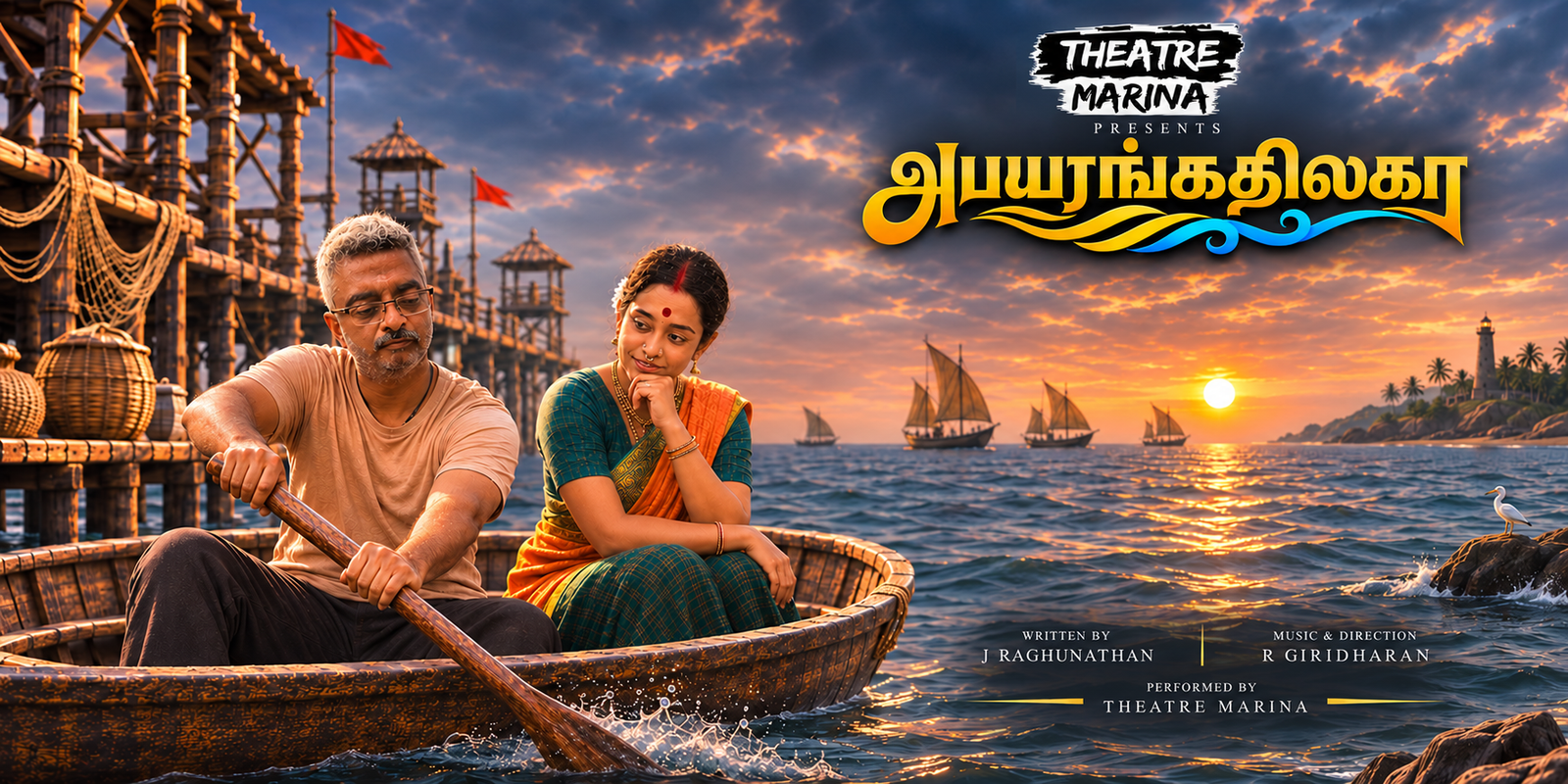
- Bringing the Best to Chennai’s Stage: Just as the Cholas fused daring ambition with deep cultural respect, Theatre Marina continues to bring world-class storytelling, bold staging, and unforgettable theatrical experiences to Chennai—starting this Sunday with Abayarangathilaga.
Next on stage
Abayarangathilaga
Sunday, 29 November 2026 · 7:01 pm · Alliance Française of Madras, Nungambakkam
To follow in the footsteps of a legend is one of history’s hardest assignments. When Raja Raja Chola I passed the sceptre to his son Rajendra Chola I in 1014 CE, he left behind an empire already transformed—an efficient revenue administration, a disciplined standing army, a burgeoning blue-water navy, and the towering granite marvel of the Brihadeeswarar Temple at Thanjavur.
Most rulers would have spent a lifetime simply consolidating such an inheritance. Rajendra Chola I treated it as a launchpad. Over the next three decades, he would carry the Chola tiger banner across rivers, mountain ranges, and open oceans on a scale never seen before in Indian history—and yet, at the absolute summit of his power, express his deepest greatness through a quiet act of humility toward his father.
Forged Beside the Throne
Rajendra was no untested heir when he assumed sole sovereignty. Appointed co-regent (Yuvaraja) in 1012 CE, he had already commanded decisive campaigns in the Deccan and southwestern India under his father’s watch. He understood that Chola power rested on two pillars: swift military mobility and tightly organized local governance.
Once crowned, Rajendra wasted no time securing the southern heartland. In 1017 CE, he completed the conquest of Sri Lanka—capturing the Sinhala crown jewels and bringing the entire island under Chola administration—while appointing Chola-Pandya viceroys to firmly anchor Madurai and Kerala. With his southern flank secure and the Western Chalukyas held in check across the Tungabhadra river, Rajendra turned his gaze northward.
The March to the Sacred Ganga
Around 1019–1022 CE, Rajendra’s generals embarked on an audacious overland campaign through Kalinga, Dakshina Kosala, and Bengal, defeating Mahipala I of the Pala dynasty and reaching the banks of the River Ganges.
In classical Indian statecraft, bringing sacred Ganga water back to the Kaveri delta was more than a military trophy; it was an unmistakable declaration of imperial supremacy across the subcontinent. Victorious commanders carried pitchers of the holy river home on the heads of defeated chieftains—earning Rajendra the resounding title Gangaikondan (The Conqueror of the Ganga).
Across the Bay of Bengal: Master of the Eastern Seas
Yet Rajendra’s boldest stroke was still ahead, and it unfolded not on land, but across open salt water.
For centuries, maritime trade between Arabia, India, and Song China flowed through the narrow Malacca and Sunda straits, controlled by the powerful Srivijaya Empire based in Sumatra and the Malay Peninsula. When Srivijaya’s mercantile policies began choking Chola trade guilds (Ainnurruvar and Manigramam) seeking direct access to Chinese ports, Rajendra responded with a feat unmatched in medieval naval warfare.
In 1025 CE, a massive Chola armada crossed the Bay of Bengal. Utilizing monsoon winds, troop transports, and deep-sea war vessels, Rajendra’s forces struck key Srivijayan ports in rapid succession—capturing Kadaram (modern Kedah in Malaysia), Palembang, Pannai, Malaiyur, and Tambralinga, and taking King Sangrama Vijayatunggavarman prisoner.
Unlike territorial annexations on the mainland, this expedition was a masterclass in strategic maritime projection. Having shattered Srivijaya’s naval monopoly and reopened free sea lanes for Tamil merchants, Rajendra restored the kingdom under Chola suzerainty and returned home bearing the title Kadaram Kondan (Conqueror of Kadaram). From the Maldives to the Malay Peninsula, the Bay of Bengal had effectively become a Chola lake.
Gangaikonda Cholapuram: Grandeur Tempered by Humility
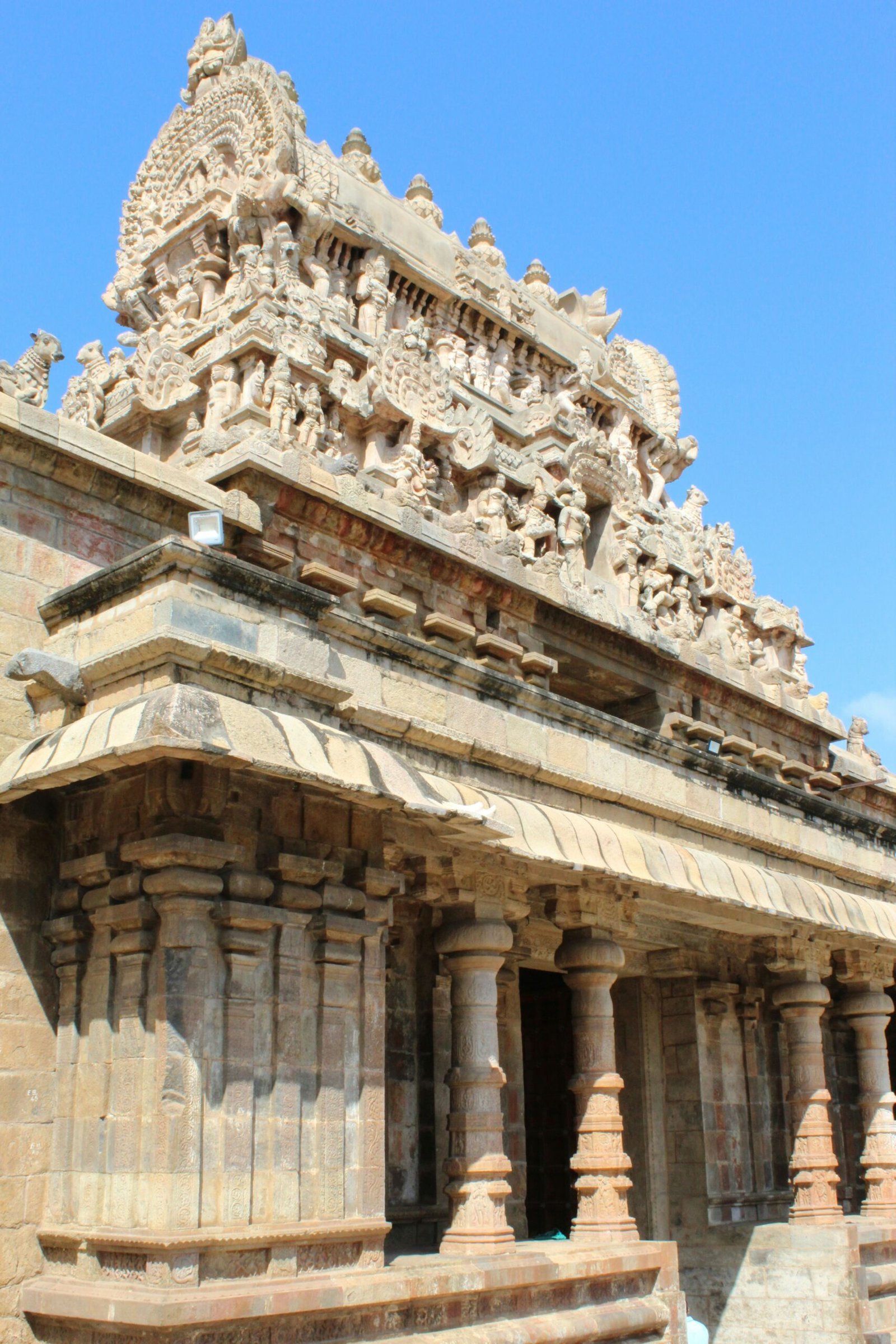
To commemorate his northern and overseas triumphs, Rajendra founded a brand-new imperial capital: Gangaikonda Cholapuram (“The City of the Chola Who Took the Ganga”). Alongside a vast artificial irrigation lake—the Cholagangam, fed symbolically with water brought from the Ganges—he commissioned a monumental temple dedicated to Lord Shiva: the Brihadeeswarar Temple of Gangaikonda Cholapuram.
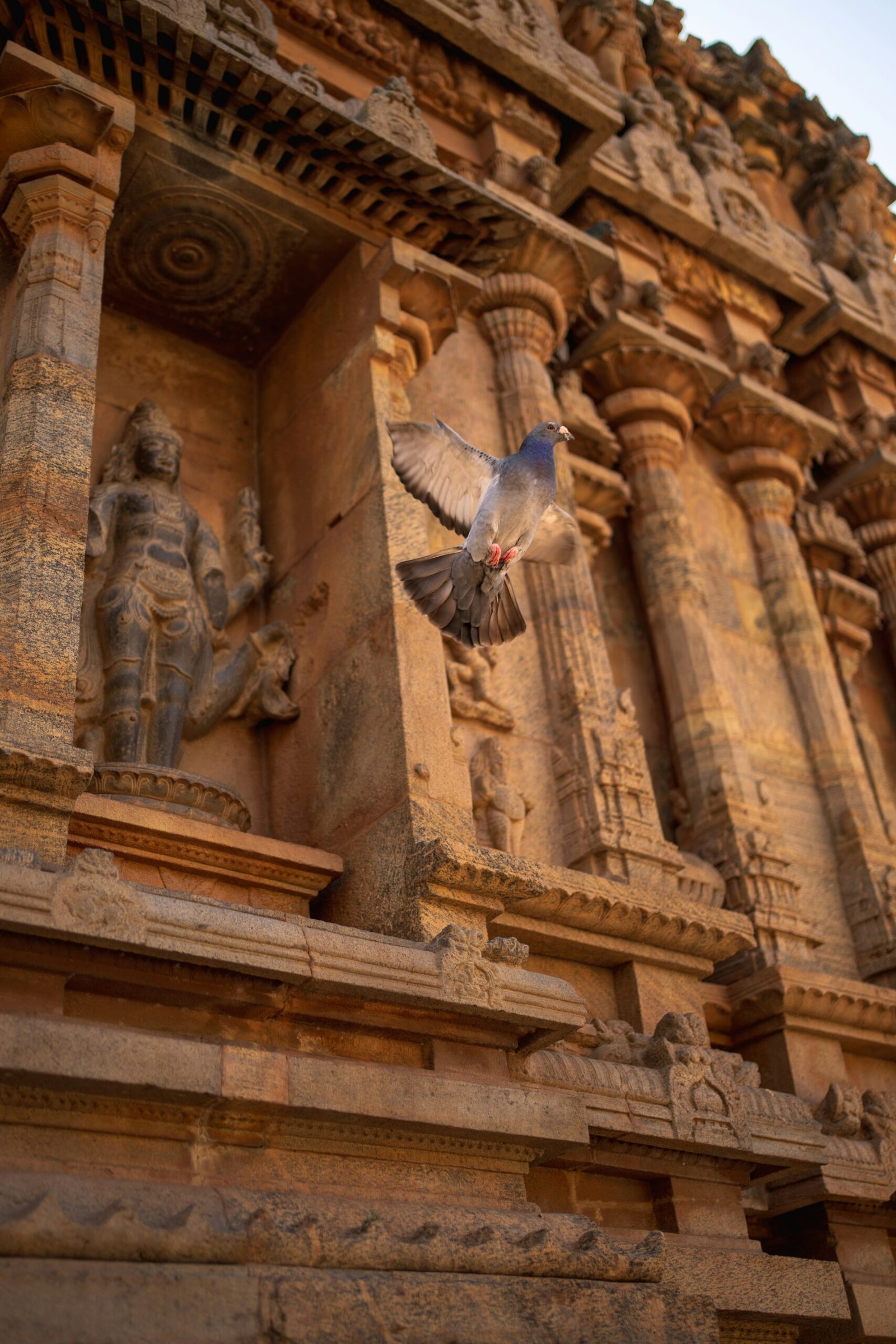
Built of finely dressed granite and adorned with breathtaking sculptural panels—including the famous Chandesanugrahamurti relief depicting Shiva blessing a devotee—the temple echoed the architectural grammar of his father’s Great Temple at Thanjavur. It possessed the same soaring ambition, the same cosmic symmetry, and the same mastery over hard stone.
Yet look closely at its skyline, and a remarkable story emerges.
Where Raja Raja’s Thanjavur vimana rises to roughly 66 metres (216 feet), Rajendra deliberately built the vimana of Gangaikonda Cholapuram to around 55 metres (182 feet)—noticeably shorter, even as he softened its stark pyramidal lines with graceful, subtle curves.
Rajendra commanded far greater wealth, territory, and manpower than his father ever had. He could easily have built a tower twice as tall to eclipse Thanjavur. Instead, he chose restraint. By ensuring his temple stood a few metres lower than Rajarajesvaram, Rajendra enshrined an enduring lesson in granite: true greatness does not erase the legacy that made it possible—it honours it, builds upon it, and lets the foundation shine.
Carrying That Spirit Forward: Theatre Marina & Chennai’s Stage
That timeless Chola balance—combining fearless exploration with deep respect for craft and heritage—is the very spirit that drives Theatre Marina in Chennai today.
Just as the Cholas looked across wide oceans while staying rooted in the artistic soul of Tamilakam, Theatre Marina is dedicated to bringing the very best of global and homegrown theatre to Chennai’s stage. From sharp, contemporary storytelling and gripping psychological dramas to grand historical fantasies, the company strives to push creative boundaries while honouring the rich traditions of live performance.
Experience that passion live this Sunday
Abayarangathilaga: An Epic from the Chozha Empire
Step straight into the intrigue, royal secrets, and twilight wonder of the Chola court as Theatre Marina brings history to life on Chennai’s stage.
Sunday, 29 November 2026 · 7:01 pm · Alliance Française of Madras, Nungambakkam, Chennai