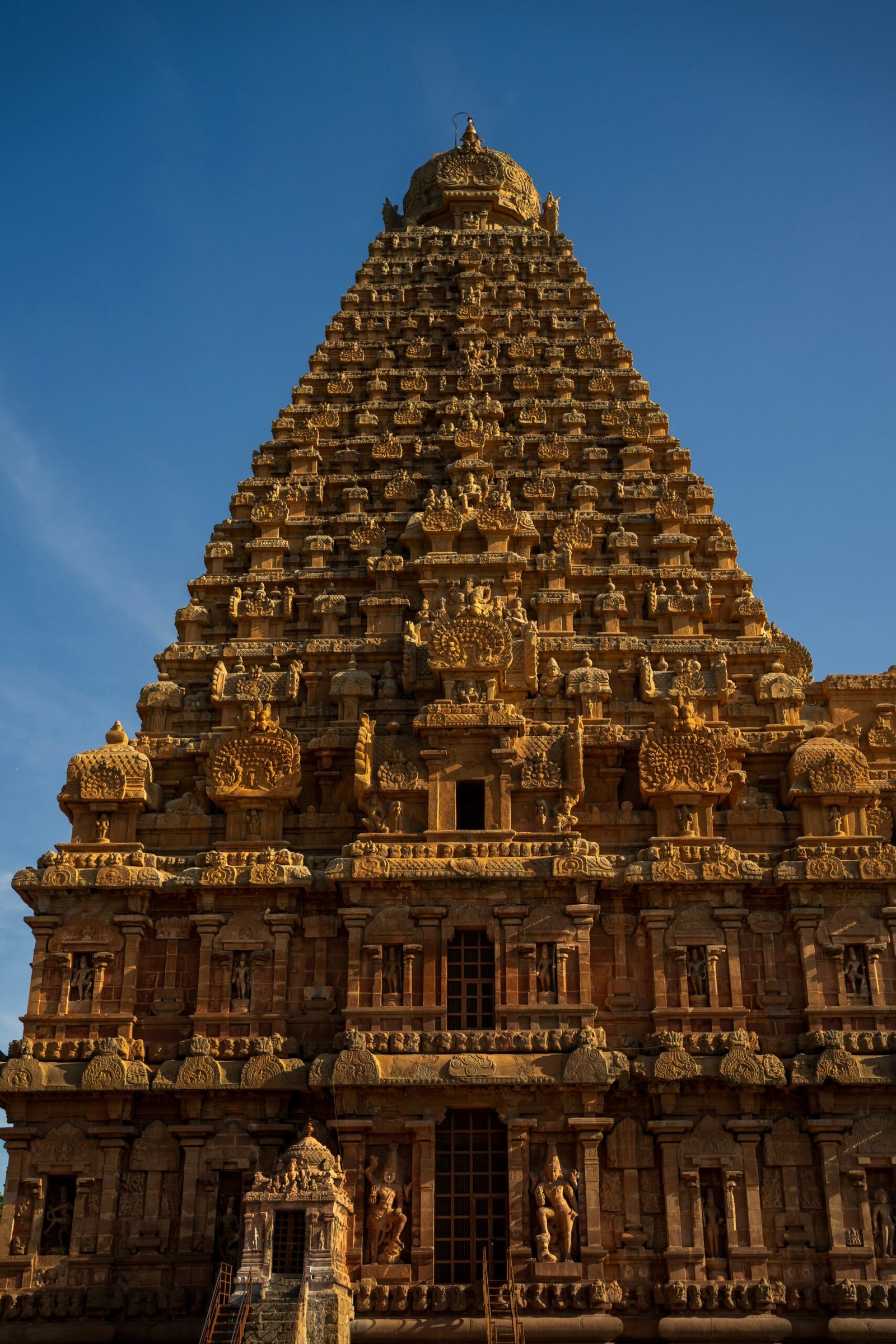
Photo by Nandhu Kumar on Unsplash (Unsplash License)
Quick summary
- Deep Roots in the Kaveri Delta: Long before the grand stone temples of Thanjavur, the Cholas ruled as Sangam-era river kings under legends like Karikala Chola, before fading into obscurity during the Kalabhra interregnum and Pallava dominance.
- The Ninth-Century Comeback: Around 850 CE, Vijayalaya Chola captured Thanjavur, and his successors—Aditya I, Parantaka I, and Sundara Chola—forged a resilient Tamil kingdom across South India despite a devastating setback against the Rashtrakutas at Takkolam.
- Raja Raja Chola I’s Transformation (985–1014 CE): Ascending the throne in 985 CE, Raja Raja Chola I centralized administration, surveyed land, organized a blue-water navy, subdued the Cheras, Pandyas, and northern Sri Lanka, and raised the Brihadeeswarar Temple in granite.
- What Comes Next: His son, Rajendra Chola I, would soon push Chola banners north to the Ganges and across the Bay of Bengal into Southeast Asia—a story we explore in our next journal entry.
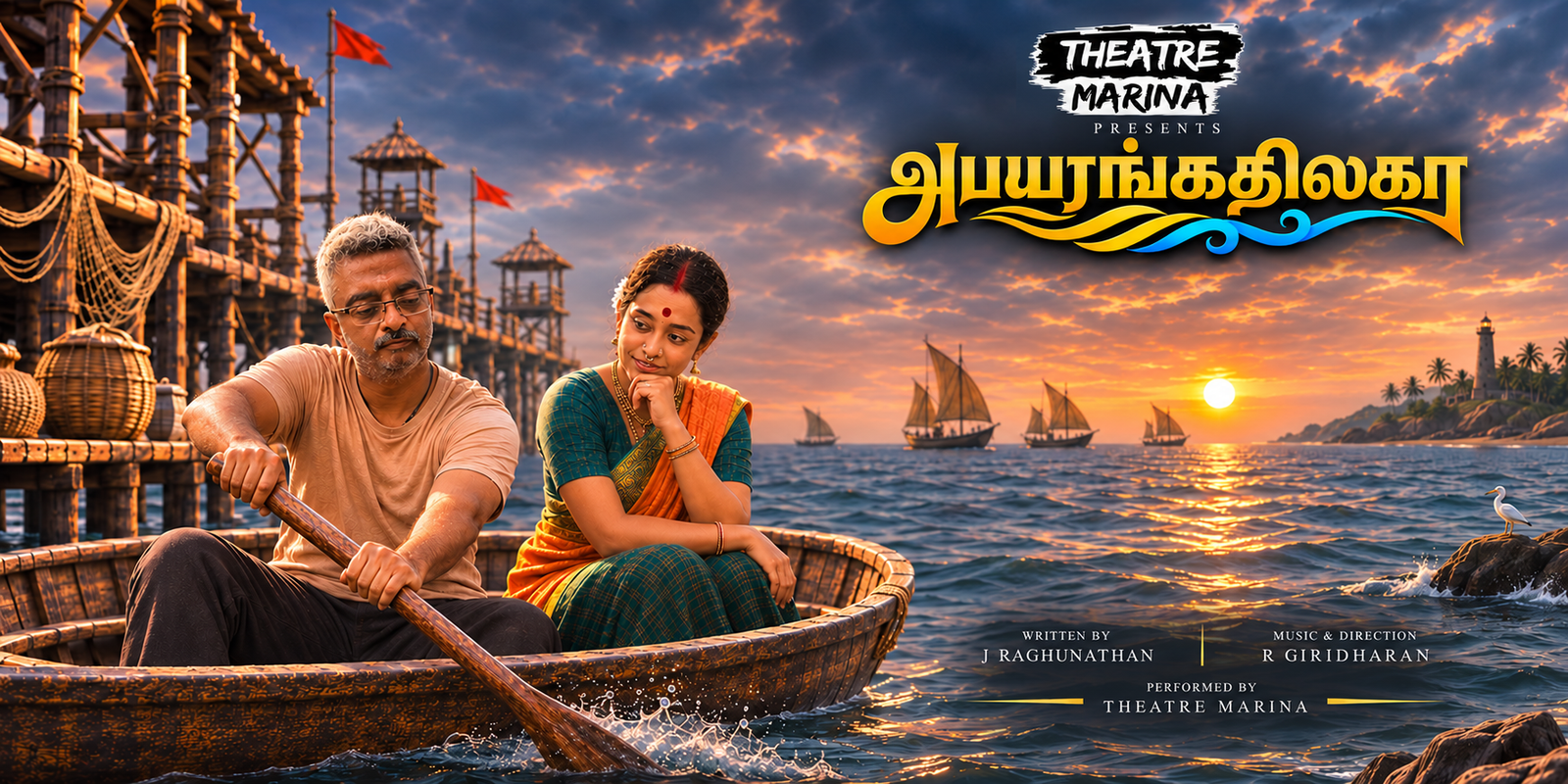
- See the Era Live on Stage: Theatre Marina stages Abayarangathilaga—set in the world of Raja Raja Chola—on Sunday, 29 November 2026 at 7:01 PM at Alliance Française of Madras.
Next on stage
Abayarangathilaga
Sunday, 29 November 2026 · 7:01 pm · Alliance Française of Madras, Nungambakkam
When people hear the name Chola, two images usually come to mind: the soaring granite vimana of Thanjavur and naval armadas crossing the Bay of Bengal. Yet that imperial golden age did not appear out of nowhere. It rested on centuries of survival, reinvention, and hard-won statecraft forged long before Raja Raja Chola I ever wore the crown.
Shadows Before the Dawn: The Early and Medieval Cholas
In the early centuries of the Common Era, the Cholas were one of the three crowned dynasties of Sangam Tamilakam alongside the Cheras and Pandyas. Ruling from the fertile Kaveri delta—with capitals at Uraiyur and the bustling port of Kaveripoompattinam (Puhar)—early monarchs like Karikala Chola built river embankments such as the Kallanai dam and traded briskly with Rome and Southeast Asia.
Then came a long eclipse. Between the third and ninth centuries, the mysterious Kalabhra upheaval and the subsequent rise of the Pallavas in Kanchipuram and the Pandyas in Madurai reduced the Cholas to minor feudatories. For generations, the tiger emblem waited in the wings.
The turning point arrived around 850 CE, when Vijayalaya Chola seized Thanjavur from the Muttaraiyar chiefs during a Pallava–Pandya conflict. His son, Aditya I, shattered Pallava overlordship altogether, bringing Tondaimandalam under Chola control. Parantaka I (r. 907–955 CE) pushed the frontier further, capturing Madurai and earning the title Maduraikonda, while laying down detailed rules for autonomous village assemblies (sabhas) recorded in the famous Uttaramerur inscriptions.
Yet the pre-Raja Raja era was anything but an unbroken march. In 949 CE, the Rashtrakuta king Krishna III crushed the Chola army at the Battle of Takkolam, killing Crown Prince Rajaditya and shrinking the kingdom back toward its Kaveri heartland. Over the next three decades, rulers like Sundara Chola and Uttama Chola patiently recovered lost territory, stabilized the royal treasury, and restored political order—handing a hardened, battle-tested state to Arulmozhi Varman in 985 CE.
How Raja Raja Chola I Changed Everything
When Arulmozhi Varman ascended the throne as Raja Raja Chola I (r. 985–1014 CE), he turned a regional kingdom into an administrative and maritime superpower.
First, he re-engineered governance. Raja Raja conducted a meticulous empire-wide land survey to standardize taxation, audited temple and village accounts, and replaced loosely tied local chiefs with a salaried imperial bureaucracy. Second, he transformed the Chola military into a coordinated land-and-sea force. He broke the Chera–Pandya alliance at Kandalur Salai, annexed northern Sri Lanka—making Polonnaruwa a provincial capital—and brought the Maldives under Chola naval reach, securing vital Indian Ocean trade lanes linking Arab ports with Song China.
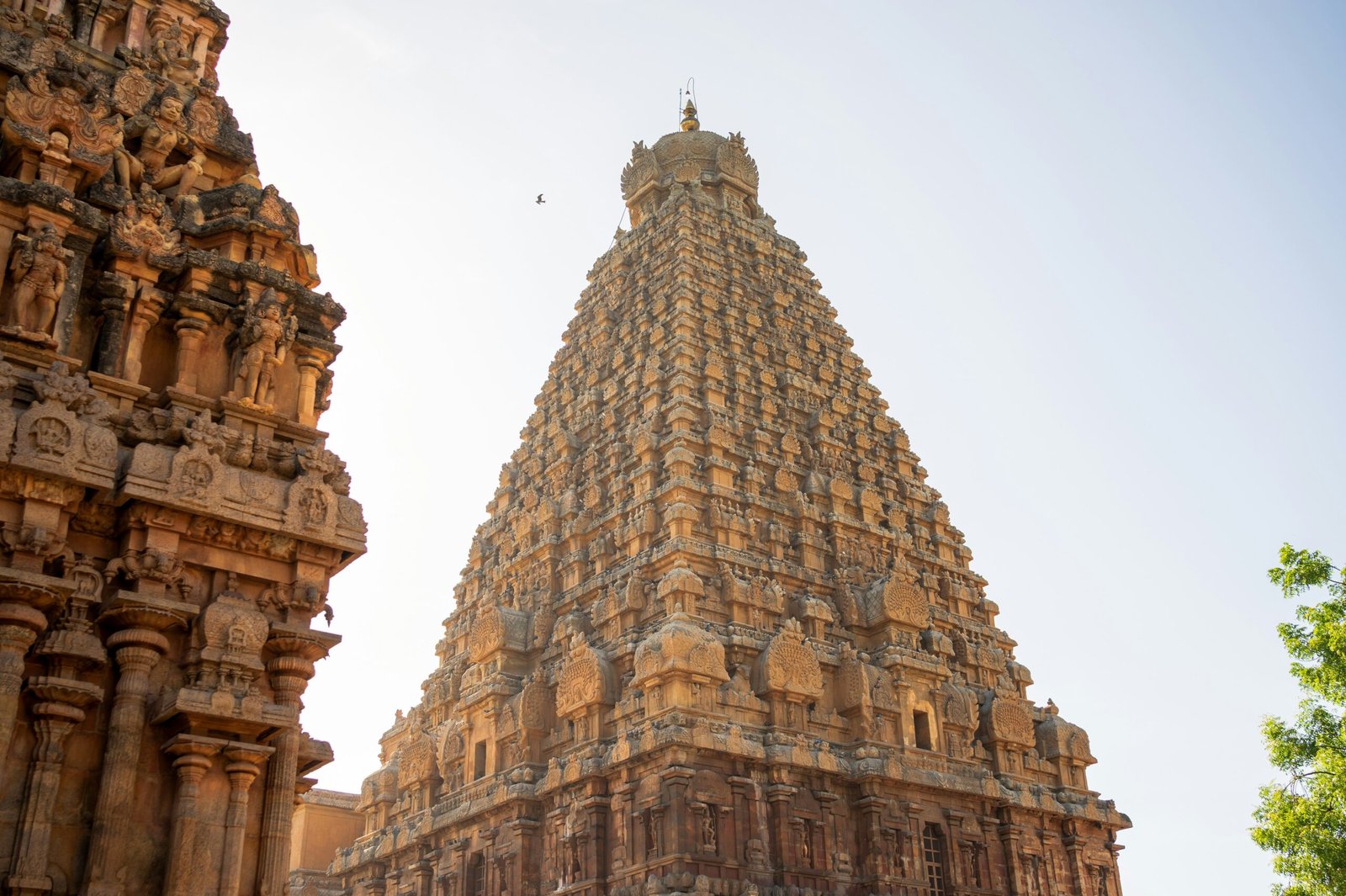
Above all, Raja Raja understood the power of cultural permanence. Completed in 1010 CE, the Brihadeeswarar Temple (Rajarajesvaram) at Thanjavur was not merely a monument of devotion; it was the economic, artistic, and civic nerve center of the empire, staffed by hundreds of dancers, musicians, sculptors, and priests whose names he had chiseled directly into stone.
A Glimpse Across the Eastern Seas: What Awaits in Part Two
Even at the height of Raja Raja’s reign, an even bolder chapter was already taking shape beside him. His son and co-regent, Rajendra Chola I, would soon inherit this finely tuned war machine and carry the Chola tiger standard farther than any Indian monarch before or since—marching north to the banks of the Ganga and launching an unprecedented overseas naval expedition across the Bay of Bengal against the Srivijaya Empire in Sumatra and the Malay Peninsula. In our next journal article, we will trace Rajendra Chola’s daring eastern conquests and the empire at its widest horizon.
Experience the Chola world live this Sunday
Abayarangathilaga: An Epic from the Chozha Empire
History feels most alive when stepped into rather than merely read. Join Theatre Marina in the intrigue, royal secrets, and twilight wonder of Raja Raja Chola’s court.
Sunday, 29 November 2026 · 7:01 pm · Alliance Française of Madras, Nungambakkam, Chennai